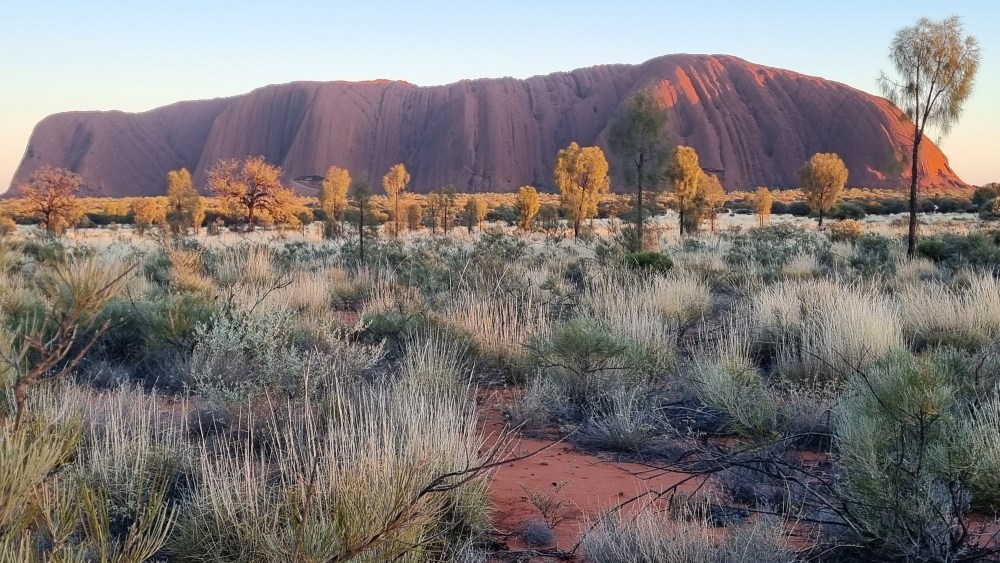

Uluru isn’t just a landmark – it’s a living story, shaped by millennia and the spirit of the Anangu people. Eager to return to Uluru, I’m ready to delve deeper than ever before into the heart of this ancient land. This time, I’m on a mission, determined to immerse myself fully in my “Ultimate Experiences at Uluru”.
From walking the sacred Mala trail, Uluru at sunrise, absorbing the cultural wisdom shared through visitor information and paintings at the Cultural Centre, to the ancient sounds of the Didgeridoo, this guide brings you the most powerful ways to Experience Uluru like never before.
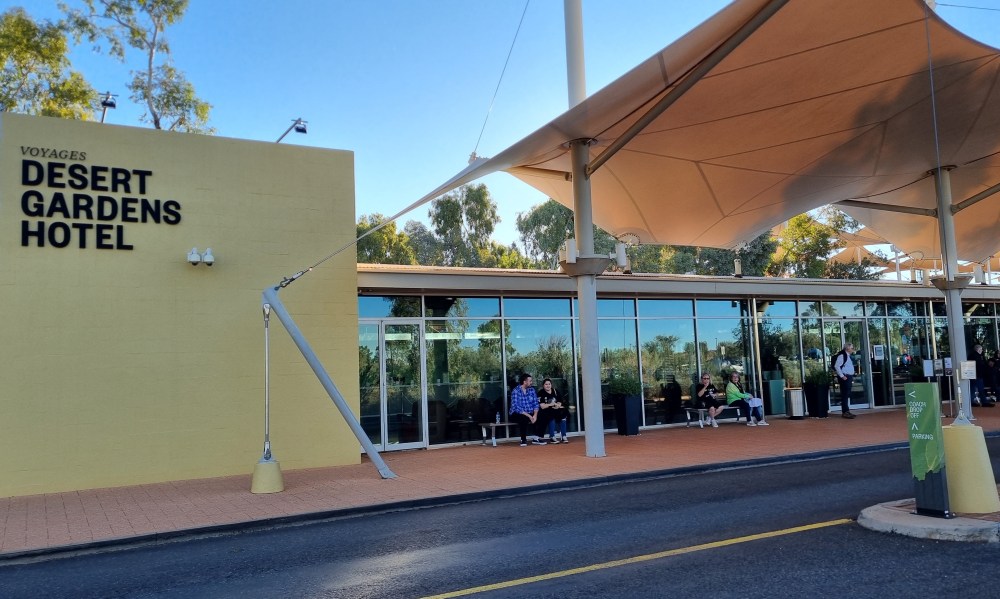
Desert Gardens – Accommodation 
Desert Gardens Pool 
Emu Walk Apartments 
Sails in the Desert – Accommodation 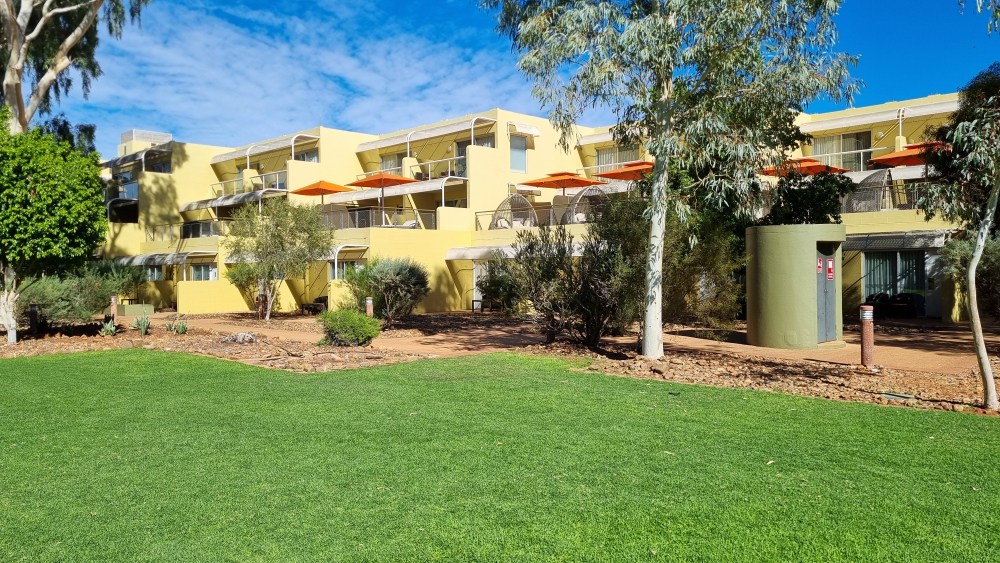
Sails in the Desert – Accommodation

Where To Stay

- ✔️ Best Time to Visit Uluru: May–August
- ✈️🧳Traveler Essentials – Fly / insect net, Warm clothing (especially during the winter months), sturdy walking shoes, current credit / debit card; most transactions are via card only.
The township of Yulara supports Ayers Rock Resort where visitors to Uluru-Kata Tjuta National Park are accommodated. The resort is situated in the town of Yulara, which is specially designed to service the tourist area surrounding the Uluru – Kata Tjuta national Park.
The resort features different levels of accommodation from hotel, apartment style, budget and camping. There’s a commercial centre (Town Square) with a supermarket, Information Centre, hairdresser and food outlets.
Yulara also has a service station, a Royal Flying Doctor Service clinic, police station and fire service. Ayers Rock Airport, located a few kilometres from the resort, is linked by flights from Virgin, Jetstar and Qantas with a Free shuttle bus connecting the airport to the Ayers Rock Resort.

I would recommend hiring a rental vehicle for your explorations. In some cases, it works out cheaper to have the rental than going on multiple tour buses, with the added flexibility of coming and going as you please. If you’re travelling with friends share the cost. On this trip we used Hertz Car Rental, pre-booked before we arrived – picked up at the Airport, received an upgraded vehicle, car was ready to go, all so easy, Thankyou Hertz!!!!

Also provided at the Resort are several Free tours that can be pre-booked with easy walking paths throughout the gardens and open green spaces. Where there are steps, there are ramps, making it very accessible for all. There are also several Free carparks that are close to the resort if you have hired or a driving your own vehicle.
🔥Tip: For more information on your stay, click on the link Ayers Rock Resort -Amazing Experiences:

- Yulara Ayers Rock Resort
- Accommodation Options
- Dining & Food – You will not go hungry. Cafes, Restaurants, Outback Hotel and a well-stocked IGA Supermarket if you after your own supplies.
- Getting Around – Tour Buses, Hop On/Off Shuttle Bus (Free), Car Rental, Segways, Bicycles and Walking
Getting Around

Ayers Rock Resort is compact enough to walk around. The resort also offers a free shuttle bus to take you between your accommodation, the town square and other stops along Yulara Drive, EG – Outback Hotel, Ayers Rock campground.
Just remember that once you have your National Park pass for entry into the national park, the views, sights and sounds of the National Park are Free (Coffee, food and other purchases are card or cash).
Getting around Uluru-Kata Tjuṯa National Park is easy. All roads are sealed, so driving around the park in a normal 2WD vehicle is not a problem.
If you don’t have your own vehicle, you can rent one at the airport, join one of the many bus tours or buy an Uluru Hop on Hop off Bus Pass. There are no taxis or other public transport.
Driving Times – Some Estimated Driving Times are:
- Ayers Rock Resort to Uluṟu: 20 minutes
- Ayers Rock Resort to Kata Tjuṯa: 45 minutes
- Ayers Rock Resort to Talinguru Nyakunytjaku (Uluru Sunrise / Sunset Viewing Platform: 30 minutes
- Ayers Rock Resort to the airport: 10 minutes
Getting Around the Rock
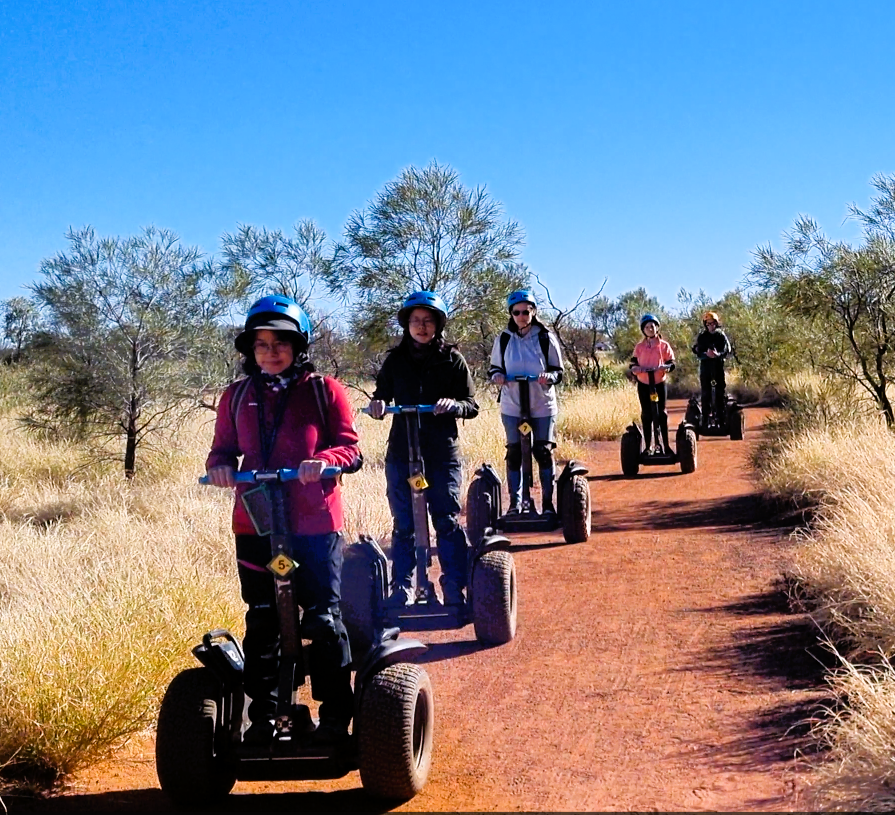
To explore the base of Uluru, you can either Drive, Cycle, hop on a Segway or See it on foot. To gain entry to the National Park you will need a National Park Pass (click here for more information), swipe the pass at the entry gate and you’re on your way. I chose the $50 annual park pass as I was at Uluru for 4 days and this gave me unlimited entry over that period.
ultimate experiences at uluru
🌄 Part 1: Uluru at First Light — Chasing the Sunrise
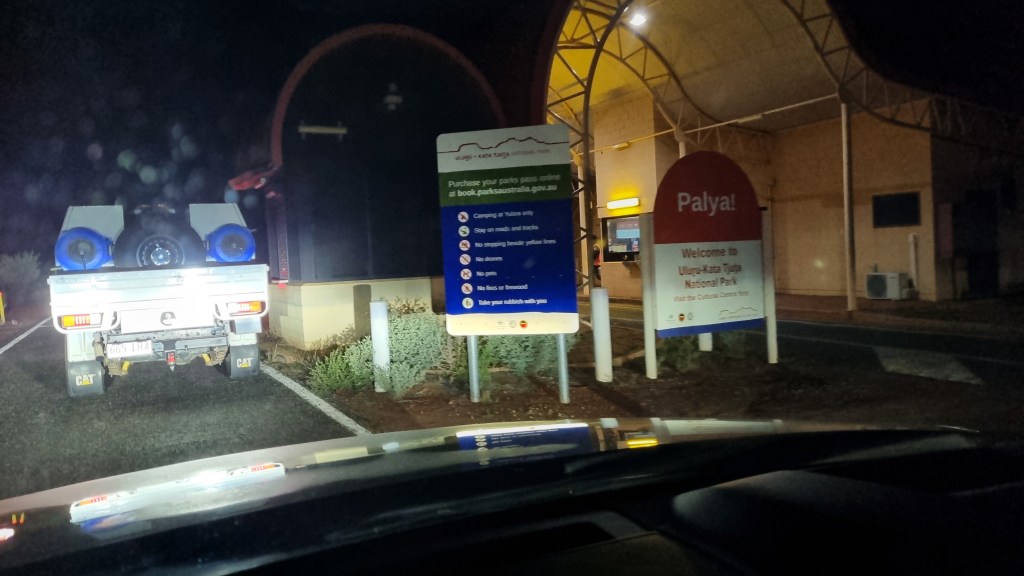
Uluru Kata-Tjuta National Park Entry
We left the Ayers Rock Resort well before dawn, there’s a silence that belongs only to the outback. We hit the road, the stars still shining in the night sky.
With the car heater gently humming, we drove through the desert darkness towards the spiritual heart of Australia – Uluru. The morning air was sharp biting through layers of clothing and coating the landscape in a still eerie calm.
Headlights carved a path through the bush as the first sight of Uluru silhouetted in the darkness appeared on the horizon. At the entry gate to Uluru – Kata Tjuta National park we scanned our national park pass. The quiet beep echoed in the stillness, an unceremonious gesture that opened the door to something profoundly sacred.
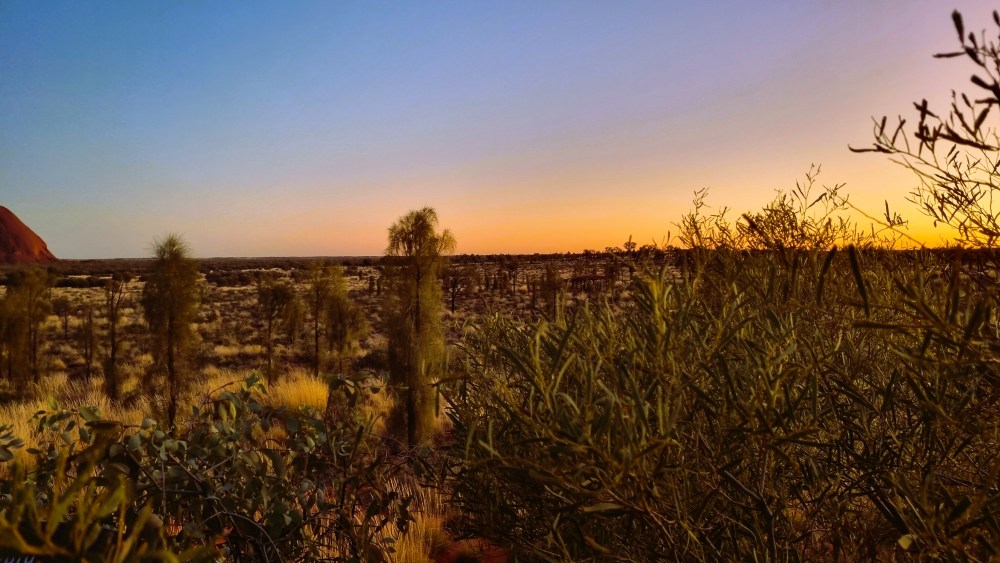
The road stretched onward, winding closer to that looming monolith that had drawn us here. Even in the soft pre-dawn grey, Uluru commanded attention – its silhouette resolute against the paling sky.
We parked at the Talinguru Nyakunytjaku viewing area, our breath puffing clouds of frigid air, and begun to climb the viewing area platform. We had also arrived before the tour buses and secured the best vantage point for this incredible experience. And then we waited.


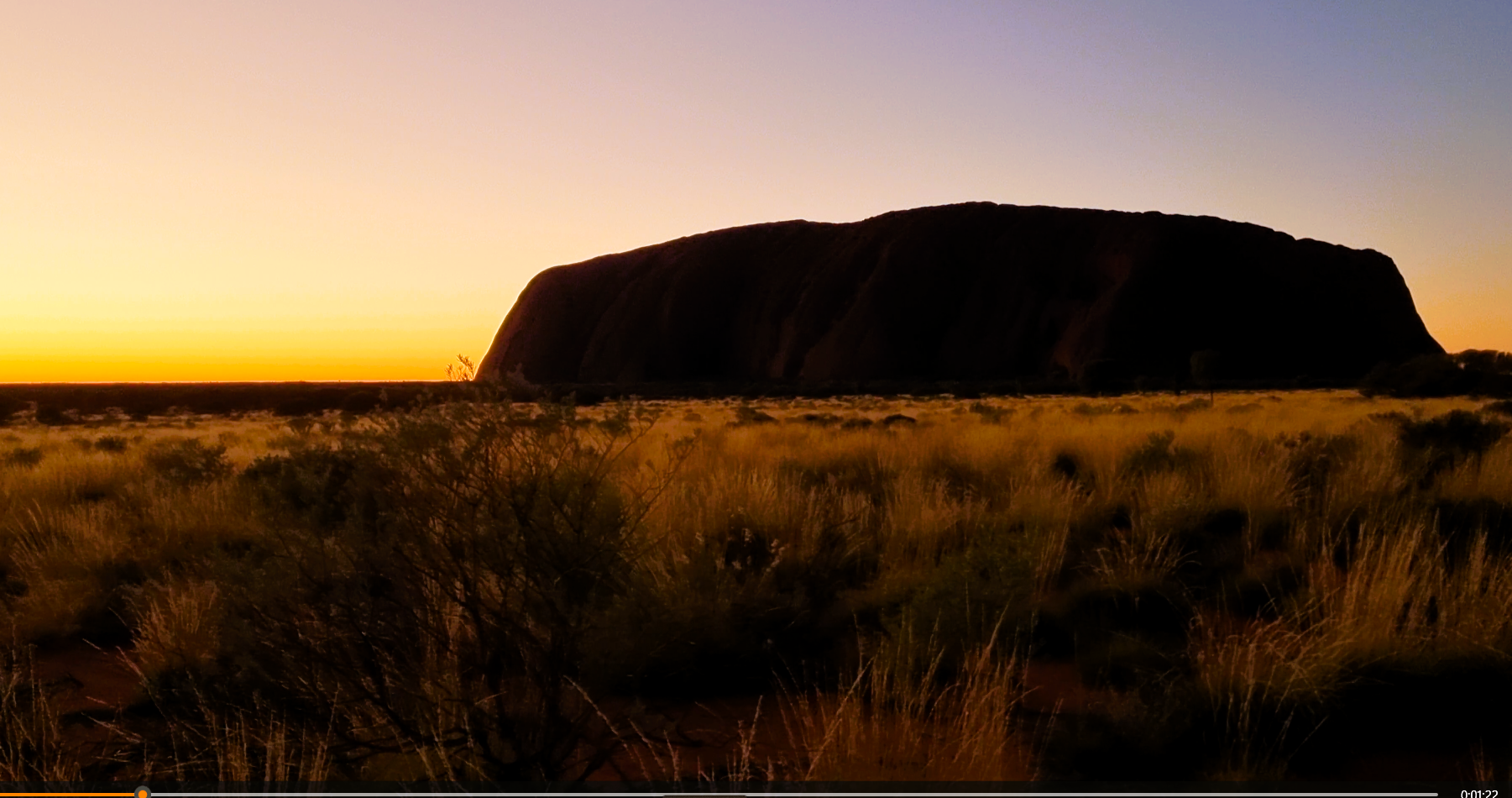
The wait wasn’t long; we had timed our arrival to perfection and then it happened: A slow boom of light spilled across the desert floor. The sun majestic on the horizon began its accent.
Uluru caught the first rays of the sunrise, its colours Deeping to amber, then to fierce ochre and glowing crimson. Every moment was alive, the early dawning revealed across the horizon, as if the rock breathed with the sun. It looked alive.
Around us, people stood quietly, cameras ready. The silence of the crowd spoke volumes as we watched in awe this spectacle unfold before us, humbled to be part of this primeval landscape, this was an ancient story in the making.

Watching Uluru at sunrise isn’t just about witnessing beauty – it’s about feeling history stretch around you.
The silence of Uluru and the Red Centre in the heart of Australia goes beyond stillness, its underneath your feet, filling your chest with reverence you didn’t know you needed. It was without a doubt the most awe-inspiring sunrise I had ever witnessed.
☕Part 2: Stories Brewed in Red Earth — Discover the Cultural Centre

We lingered, reluctant to turn our back on the view, but the chill and the desire for coffee and food nudged us onward. With the sky now a brilliant blue and our hearts full, we made our way to the Cultural Centre.
The promise of a hot coffee and bite to eat was a welcome one after the early start and chill. The centre is a treasure trove of information, offering different insights into the Anangu people, the traditional custodians of Uluru.

☕The Centre welcomed us, coffee steamed in our hands, and pastries filled the air with comfort. Here, the Anangu people’s stories unfolded through symbols, artworks and spoken language.
This wasn’t just a pit stop; it was a grounding moment – a reminder of this ancient land and the meaning and memories of the people that told its stories. Everything was connected – land, spirit and storytelling. We didn’t rush. This was the kind of place that asked you to sit and ponder what you didn’t understand and learn about Anangu Culture and the park’s natural environment.
We wandered through the displays and Aboriginal Art Galleries, gained more valuable information from the staff at the visitor’s information desk, and checked out the free presentations with Anangu and park rangers.
We spent over 1.5 hours to fully explore and appreciate the Cultural Centre.
👀Discover the Cultural Centre 👀
> Cultural Centre Building & Information Desk
> Galleries: Uluru-Kata Tjuta National Park has two galleries showcasing Anangu art and crafts – Maruku Arts and Walkatjara Art
> Tjukurpa Tunnel: Wander along these corridors. Here you will learn about Tjukurpa (the foundation of Anangu Culture) and many important creation stories of Uluru
> Ininti Café: Located in the Cultural Centre, Ininti is the only place in the park where you can buy food and drinks.
> Wi-Fi, Picnic area with shelter and seating, Toilets.
> Opening hours are 7am – 5.45pm every day (check before arrival)
🥾 👣 Part 3: Walking with Ancestors — The Sacred Footsteps of the Mala Walk

Uluru, the spiritual heart of Australia, is a place that stirs the soul. While its immense presence is captivating from any distance, to truly connect with its power you need to walk its base. And of all the incredible paths available, the Mala Walk stands out as a must-do for its profound cultural significance and stunning natural beauty. To walk the Mala Trail is to step into a living museum, a classroom, and a spiritual sanctuary all at once. It’s an experience that deepens your connection to the land and its people, we walked slowly, observed quietly and feel the experience fully.

Setting out early in the afternoon, the sun ignited Uluru in a fiery red colour, an experience you won’t forget. The Mala Walk is an easy, 2-kilometer return journey that is accessible to most fitness levels. But don’t let its ease fool you – every step is a step through time and story. We explored leisurely; each alcove and overhang telling a story, explained through rock art and storytelling along the way. 🔥Tip: You also have the choice of joining a free ranger-guided tour, leaving the Mala Trail car park at different times during the day.
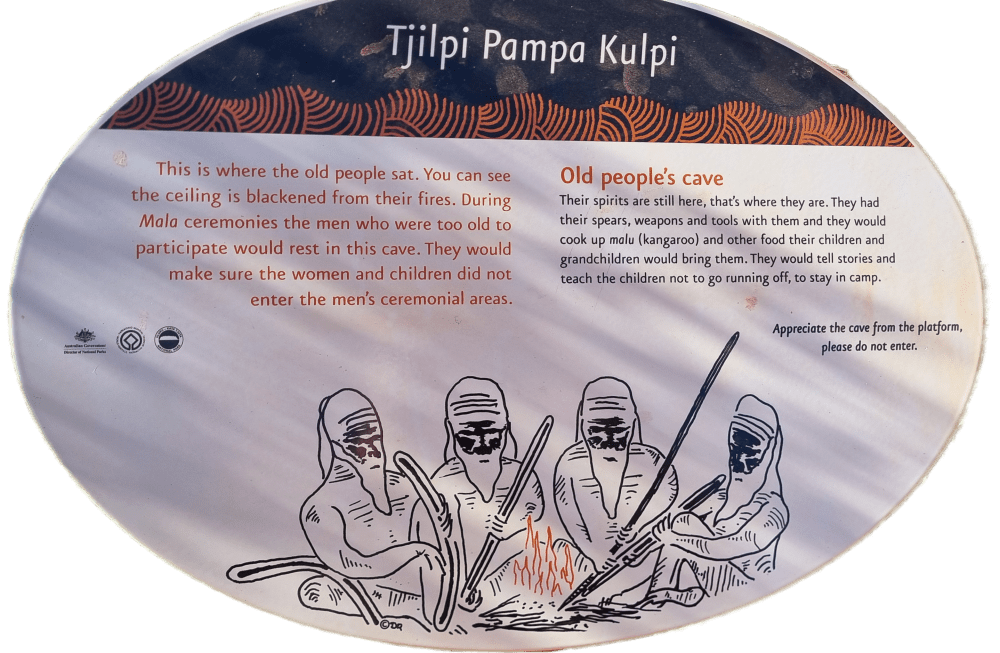
Old People’s Cave – Mala Walk 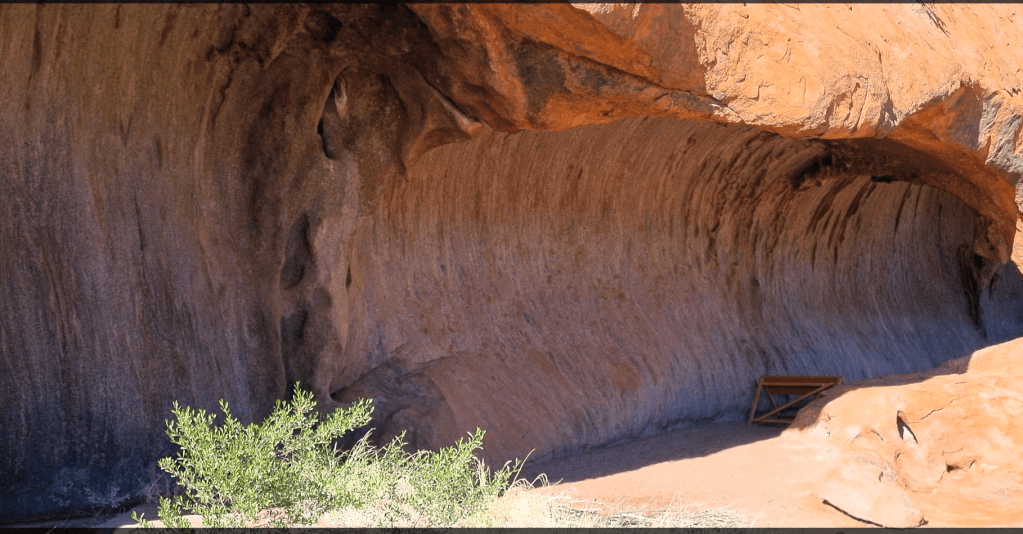
Old Peoples Cave 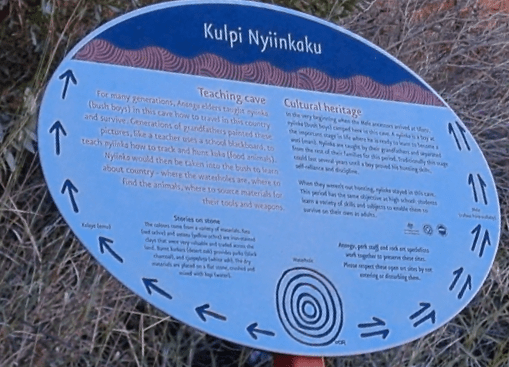
Teaching Cave – Mala Walk 
Rock Art – Teaching Cave
We followed the traditional route taken by the Mala people, and as you meander alongside this majestic rock, surfaces sculptured by weather and shaped by legend, making each bend in the path a chapter in an ongoing spiritual epic, you’ll find a series of significant sites.
The rock art, depicting ceremonies and daily life, offers a direct window into the spiritual beliefs and practices of the Anangu People. Along the walk you’ll come across sites like the men’s teaching cave and ceremonial site, old people’s cave – places where ancient knowledge was passed down through art, storytelling and lived experience.

Kantju Gorge 
Water Marks Etched into Uluru 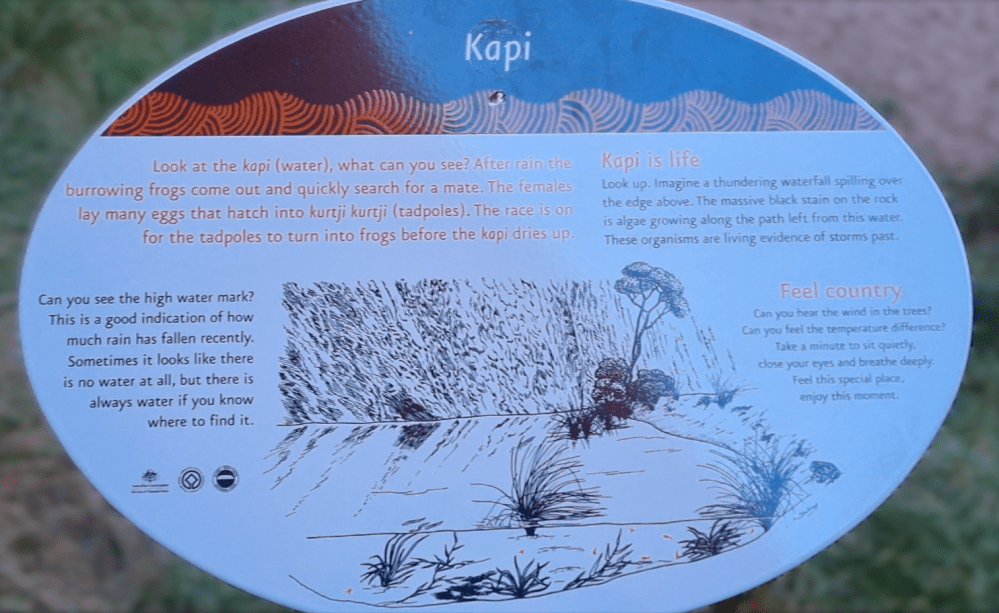
Kapi Means Water 
Kapi Means Water. Water means life. 
Kantju Gorge
Kantju Gorge awaits near the end of the trail, a green lush forest where rainwater rushes down the rock face into a pool of stillness, reflecting the sky and offering quiet respite. The waterhole was the main source of water during the Mala ceremonies for generation and generations of local indigenous people. It’s more than scenic – it’s sacred.
So, when you plan your trip to Uluru, make sure the Mala Walk is at the very top of your list. It’s an unforgettable journey, one of the world’s most iconic and cultural treasures. You walk away not just knowing more, but feeling more, an unforgettable journey that will leave you with a profound sense of wonder and respect.

Dusty, a little sun-kissed, and deeply moved, we returned to Ayers Rock Resort as the day began its descent. Food and drinks on the agenda. And then, early next morning at the Resort came the music.
🎶 Part 4: Desert Notes — A Didgeridoo Concert at Sunrise

At the Ayers Rock Resort, in the amphitheater, take a seat, a lone performer took to the stage and with slow breath, summoned a sound that felt as old as the land itself. The didgeridoo concert filled the air. The didgeridoo speaks in spirals – each note a tether to Indigenous tradition.

Rich, low vibrations pulsed through the gathering space like a heartbeat. The musician’s breath became rhythm; his rhythm became the desert landscape. A story was being told. Asked to join in and be part of the experience, we could hear the calls of the emu and dingo, the distant clap of thunder, the wind between the ghost gums.
Check out the video & join me for a virtual uluru sunrise and didgeridoo concert ⬇️⬇️⬇️⬇️👀
The sound wasn’t played – it we conjured, a story spoke in wind and earth. I’m listening with more than ears; I feel it in the soles of my feet and the centre of my chest. It’s not just music, but a connection to country and spirit, a truly unique and moving experience and we’re lucky enough to be a part of this performance.
🌌 Conclusion
Experiencing Uluru travel is not just about witnessing a rock formation, it’s about entering a living story. Standing before this majestic red monolith in the heart of Australia’s Northern Territory, I felt a pull deeper than tourism: the land invited me to listen and walk amongst the ancients.
The Mala Walk unfolded like a sacred manuscript etched in stone, revealing the spiritual connection and ancient wisdom of the Anangu people. The Uluru-Kata Tjuta Cultural Centre offered a sanctuary of learning and respect (the coffee was pretty good as well), but the sound that stayed with me most was the heartbeat of the country itself – the Didgeridoo. That uniquely Australian sound didn’t just fill the space – it filled me.
This journey to Uluru was more than a destination, it was a transformation, and even now long after the sunrises and sunsets have faded and the last note of music dissolved into twilight, the feeling remains. Until next time.

 roadtripn.blog