I’ve added this new video -Walking The Kuniya Trail. Please enjoy this once in a lifetime experience, this iconic walk in the centre of Australia at Uluru, in the Uluru / Kata Tjuta National Park.
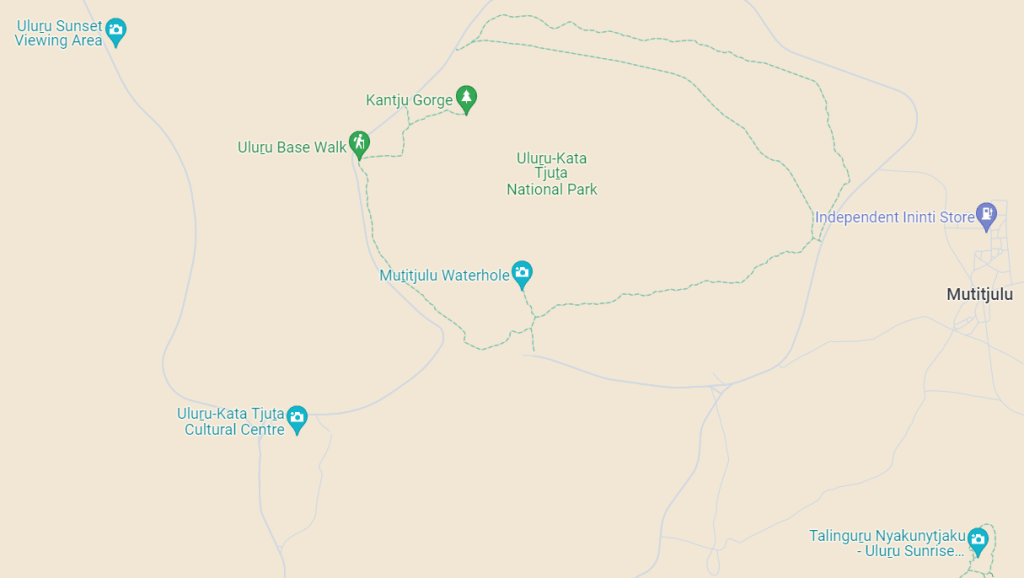
Greetings fellow road trippers. Welcome back to my Uluru adventure. Uluru-Kata Tjuta National Park is a treasure trove of magnificent sunrises and sunsets, of hiking paths, each offering their own unique perspective. Today, I invite you to lace up your hiking boots, grab your camera, feel the red earth beneath your feet as we continue our journey into the desert heart of Australia. Our destination? The legendary Kuniya Trail (aka – Kuniya Walk) at Uluru.
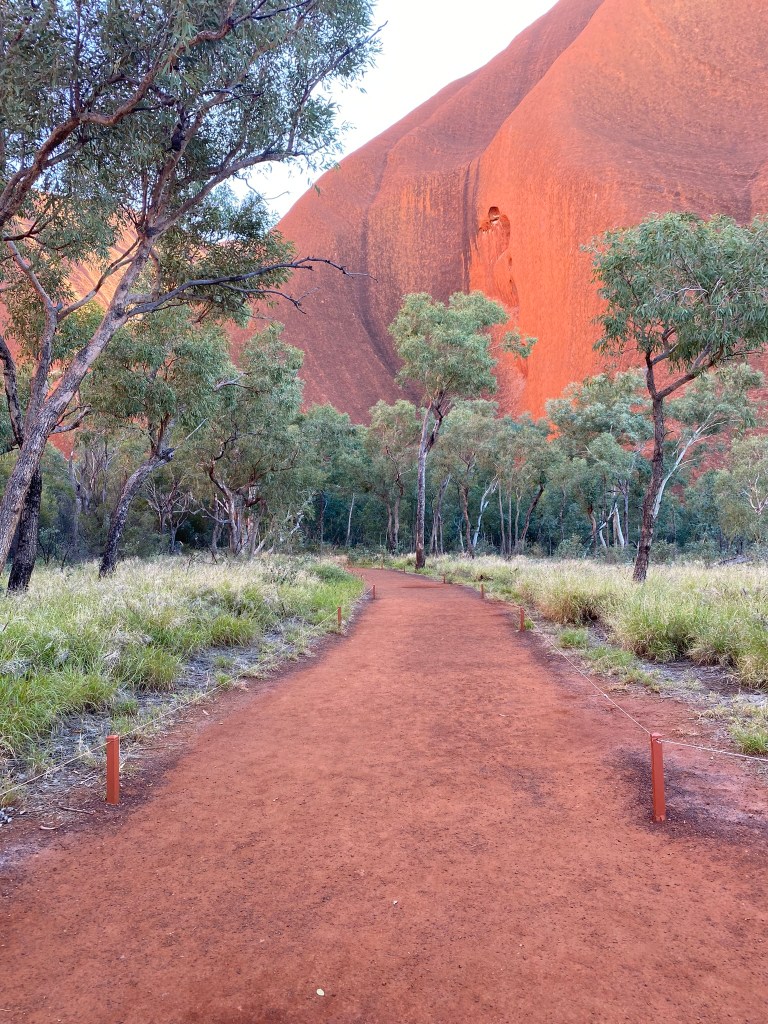
To truly understand Uluru, you must immerse yourself in its legends, its landscapes, and its spiritual stories. The Kuniya Trail, also known as Kuniya Walk, is a short but profound journey around the base of Uluru, offering a unique opportunity to do just that. As we step onto this ancient path, we become part of the living narrative – one shaped by the Anangu people over countless generations. It’s more than a mere trail, it’s a trip through time, where the physical landscape intertwines with the spiritual world. As you set foot on these well-trodden paths, you’re following in the footsteps of countless generations of the Anangu – For the Anangu, Uluru is so much more than an ancient rock, it’s a living cultural landscape that holds many sacred sites and stories. The Anangu believe that this landscape was created by ancestral beings, and that they are direct descendants of those beings.
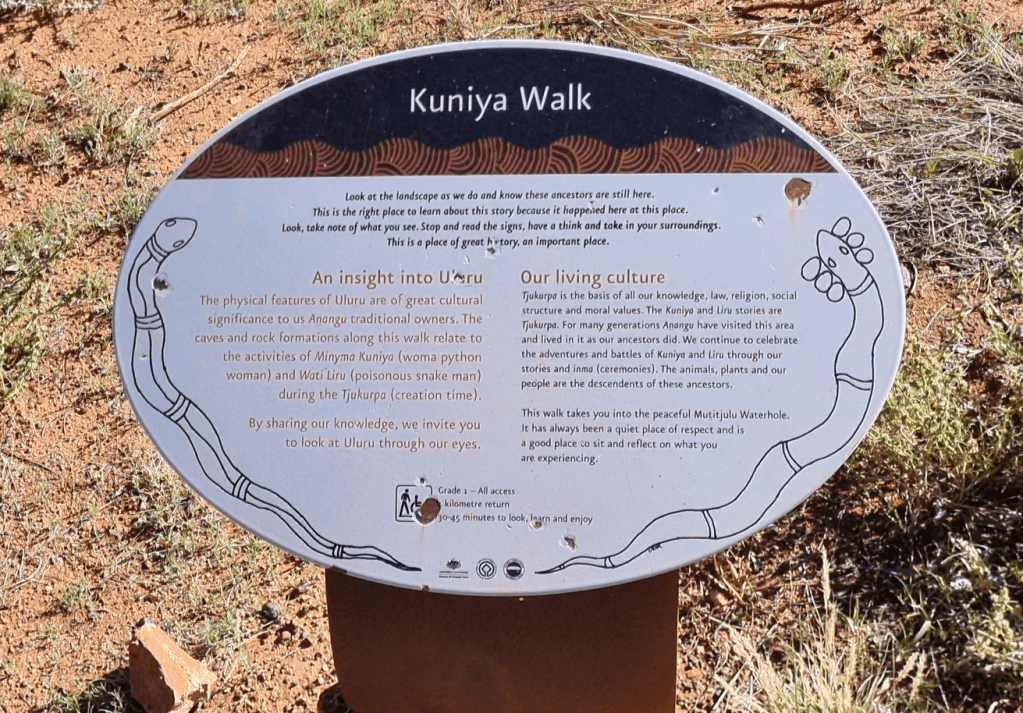
Wherever you walk along the Kuniya Trail, you are surrounded by two ancestral beings: Kuniya, the Woma Python woman, and Liru, the venomous snake man. Their story unfolds on different sides of Uluru, but it is near the Mutitjulu Waterhole that their battle took place. Along the trail, we will find ancient rock art, waterholes and perhaps catch a glimpse of Kuniya herself (well, in spirit, at least! 👻)
Kuniya Walk to Mutitjulu Waterhole – ULURU:

- Location: Uluru – Uluru-Kata Tjuta National Park, Northern Territory, Australia
- Trail: Kuniya Walk
- Time: Early morning is best especially in the summer months – try to beat the heat & crowds
- Vintage Vibes: For those who appreciate aesthetics, Uluru delivers. Its weathered surface, etched with eons of wind and rain, exudes a rustic charm. Imagine capturing that texture—the cracks, the crevices—an inspiration for your next art or photography assignment.
- Entry (to the walk): Free. You will need a National Park Pass for entry into the National Park
- Parking: Free car park at the base of Uluru
- Length (Kuniya Walk): Approximately 1 kilometre (return)
- Difficulty: Easy
- Highlights: Kuniya Walk takes you to the serene Mutitjulu Waterhole, where you can pause and reflect. The waterhole is surrounded by lush vegetation, and the reflections of Uluru on its surfaces are mesmerizing.
- Be Self Sufficient. Bring water & food, sunscreen & a hat (even in the winter months), Fly Head Net (the flies can be in plague proportions).
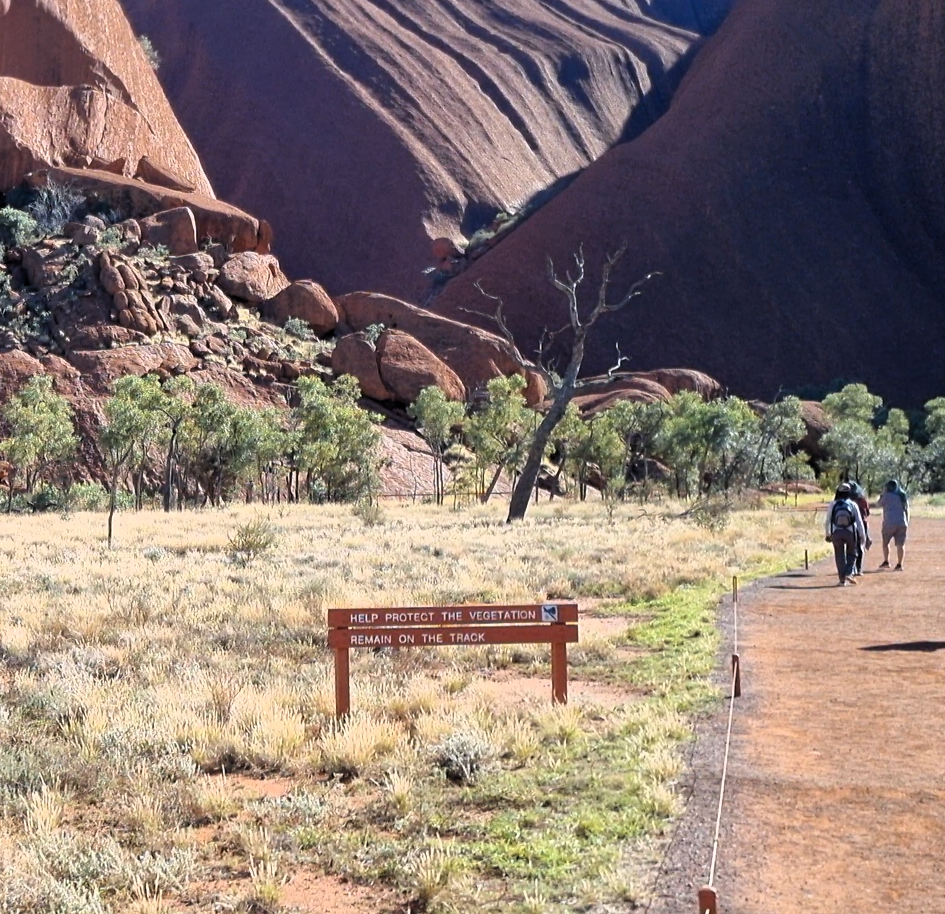
Our timing couldn’t have been better. We reached the car park at the start of the Kuniya Walk early morning before the crowds and tour buses. As I set off the sheer scale of Uluru is overwhelming. Its rusty hue glows in the morning light, the reflections and forever changing colours of the rock formation, etched with eons of wind and rain exuding a rustic charm. The trail itself is easy to follow, a gentle path that winds around the base of the rock.
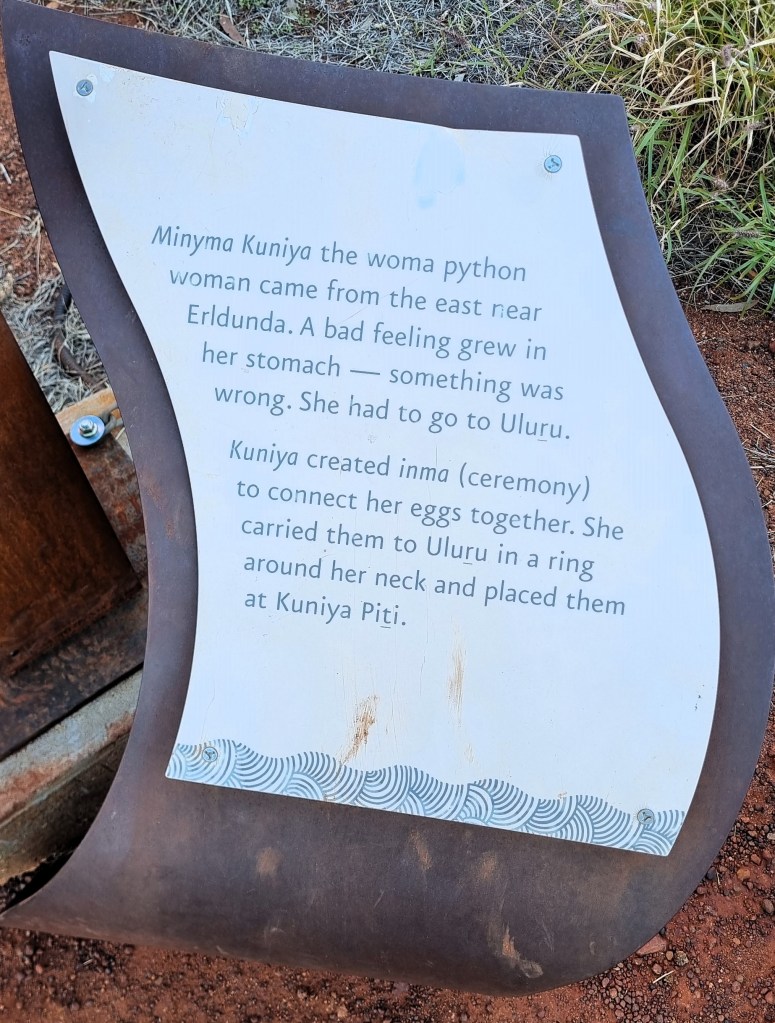
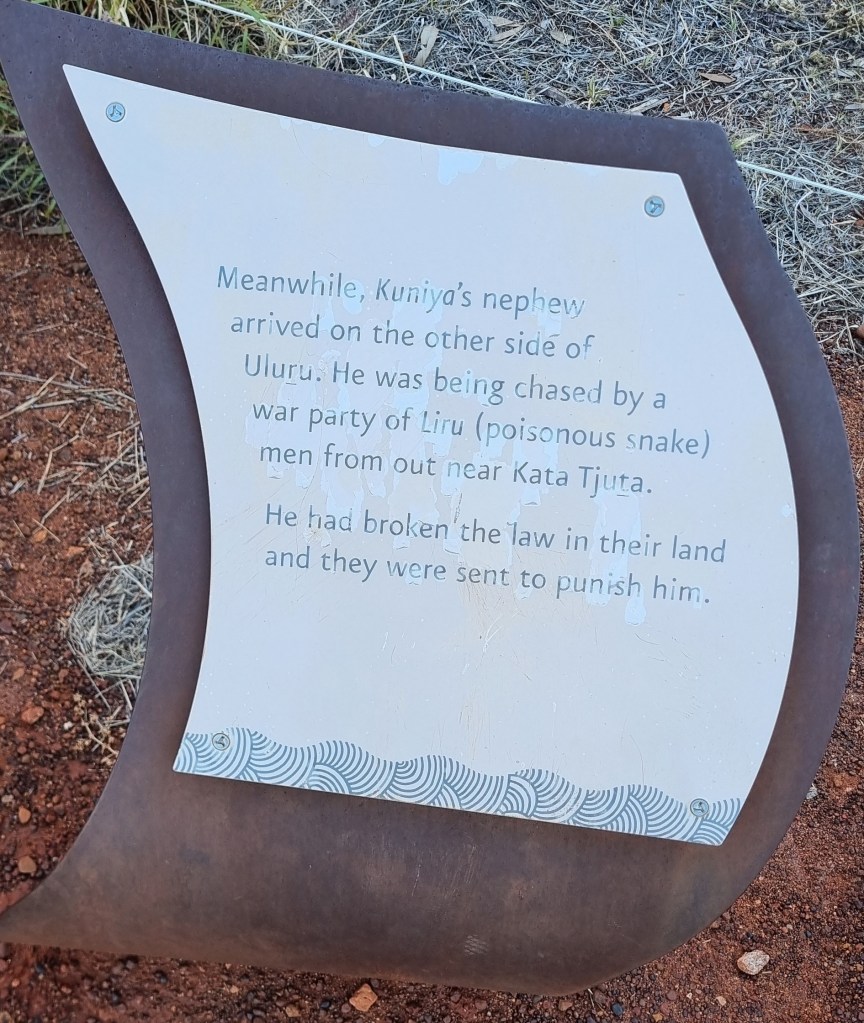

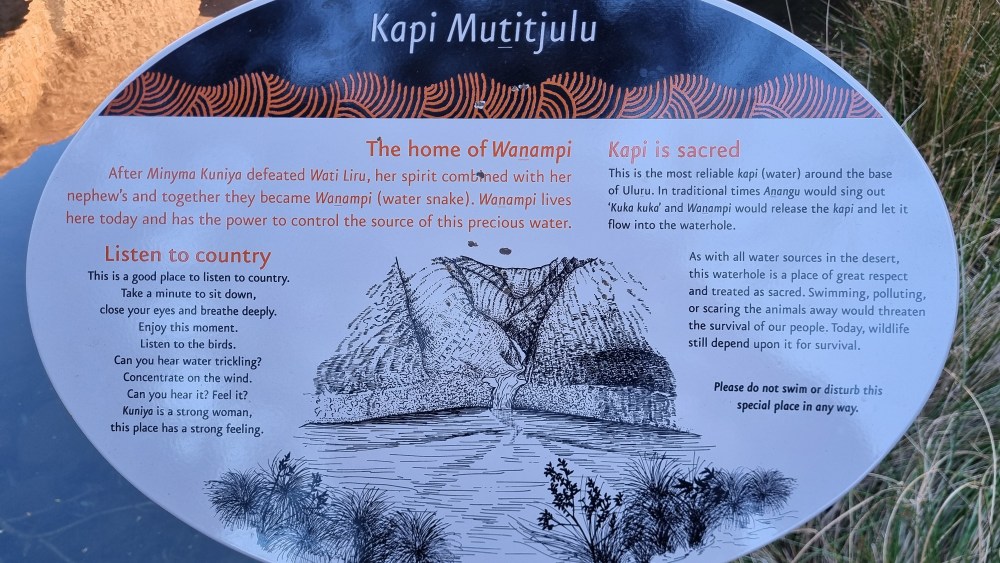

Early on, the Trail branches off to the right where I came across the first of many information panels. They tell the story of Kuniya, a powerful ancestral being, and Liru, a poisonous snake man. Their epic battle shaped the land, creating the formations and waterholes we see today. It’s a captivating tale, made all the more real by the surrounding landscape.
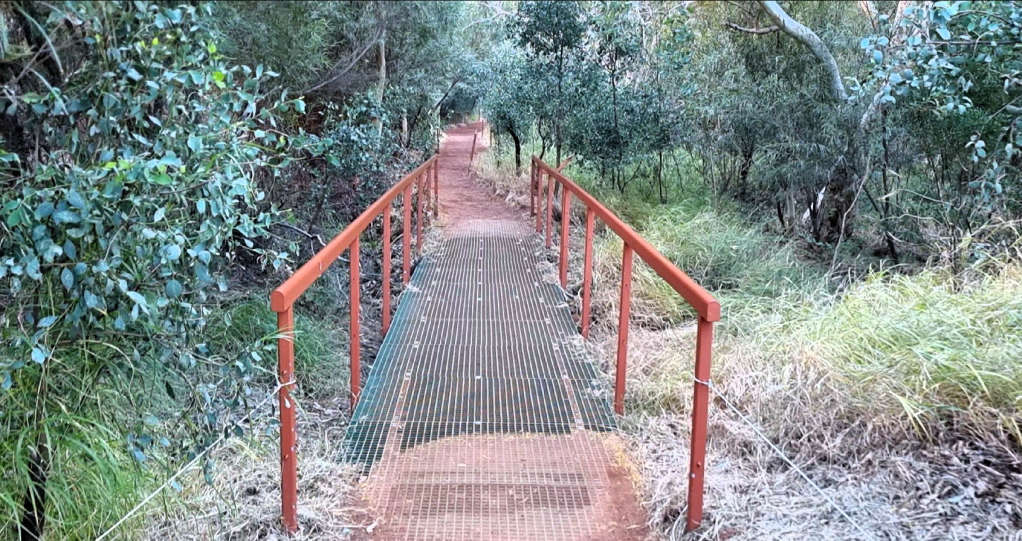
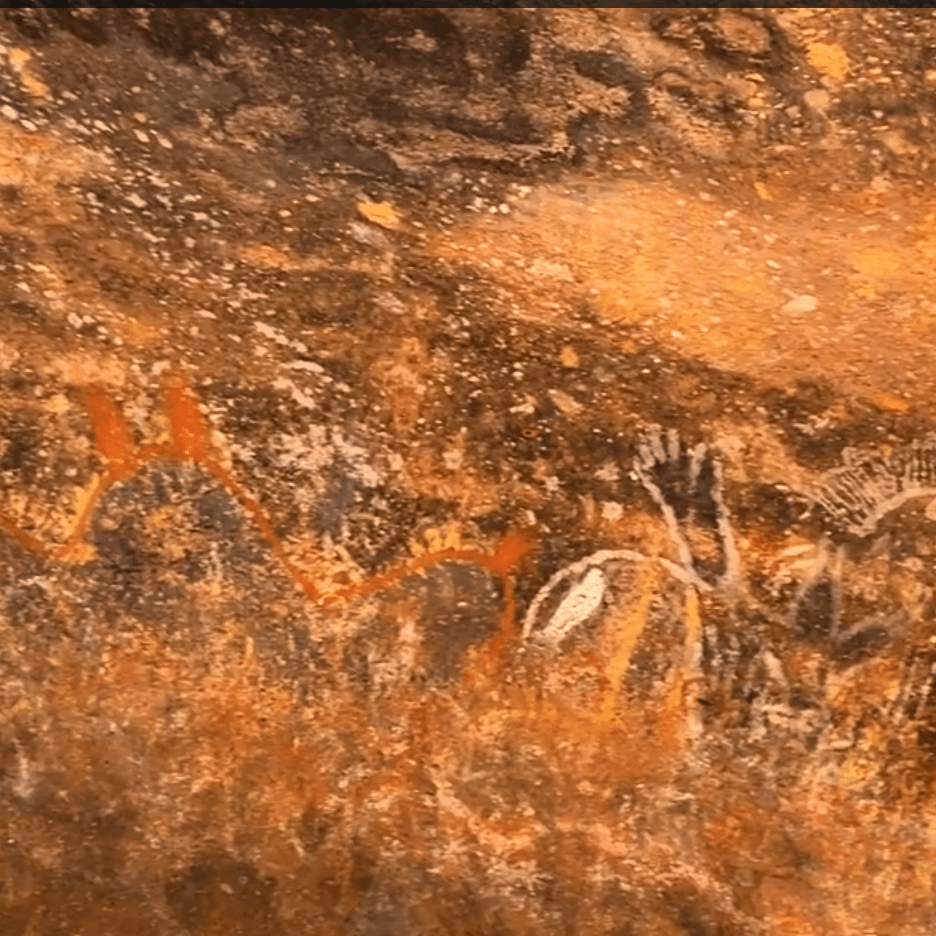
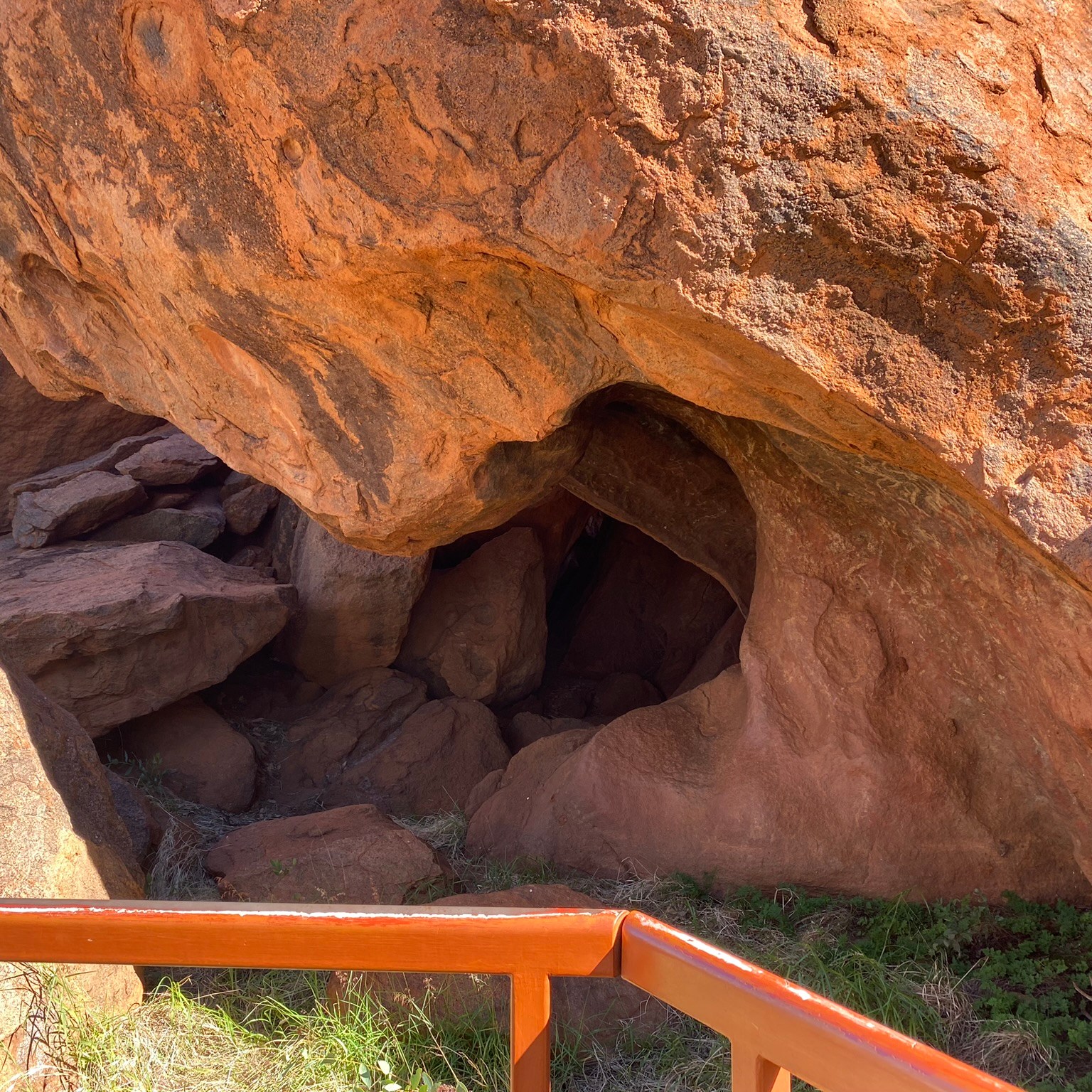
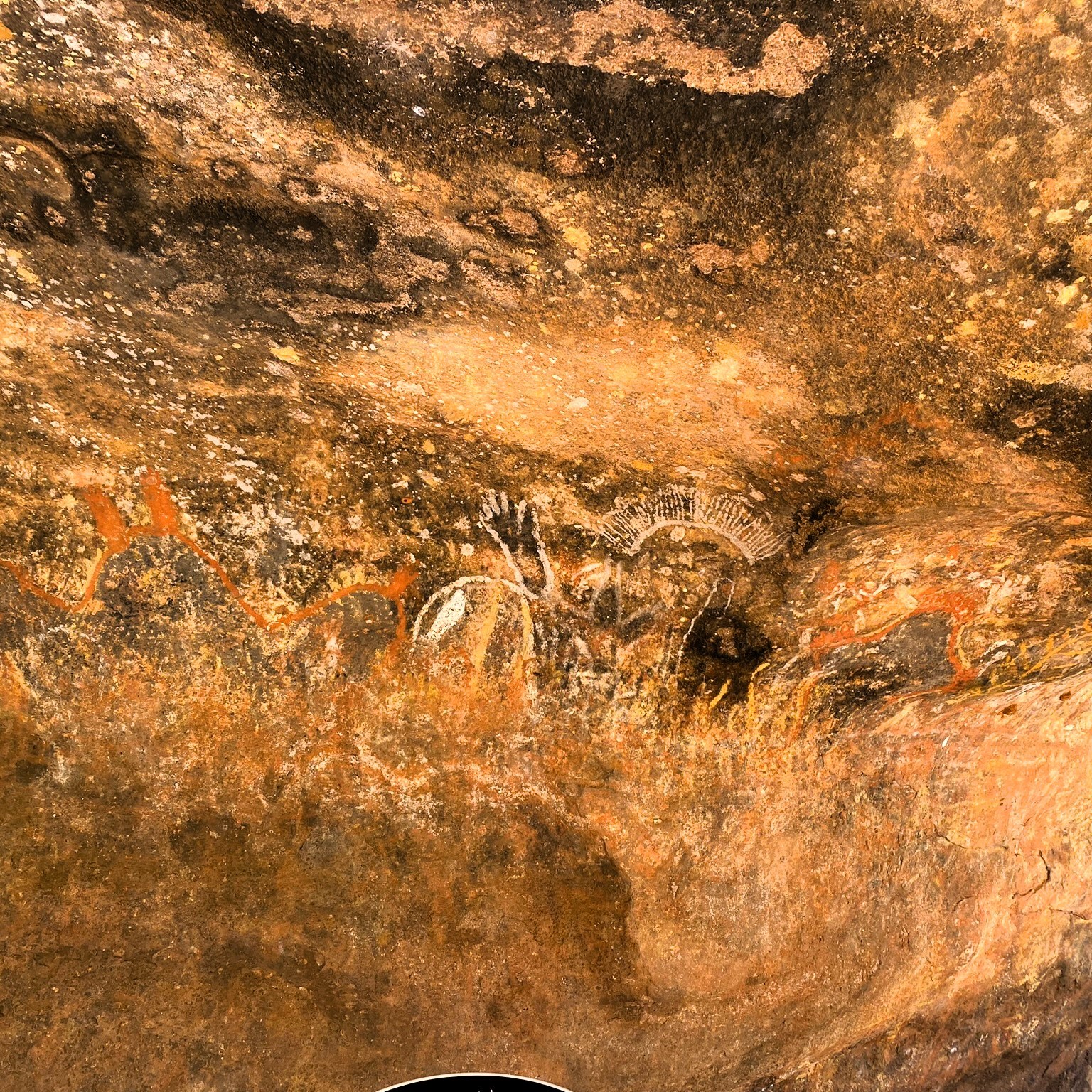
As I continue, the trail leads me deeper into the Australian bush, Uluru always only an arm’s length away. Only a short distance from the main trail, we notice faint cave paintings – the Kulpi Mutitjulu Cave – where young boys would hide and watch their fathers hunt. The trail itself is a living gallery of ancient art. Rock paintings adorn the sandstone, remnants of stories told in ochre and water. These are not mere images; they are windows into the Anangu worldview, depicting creation stories and the interconnectedness of all things.
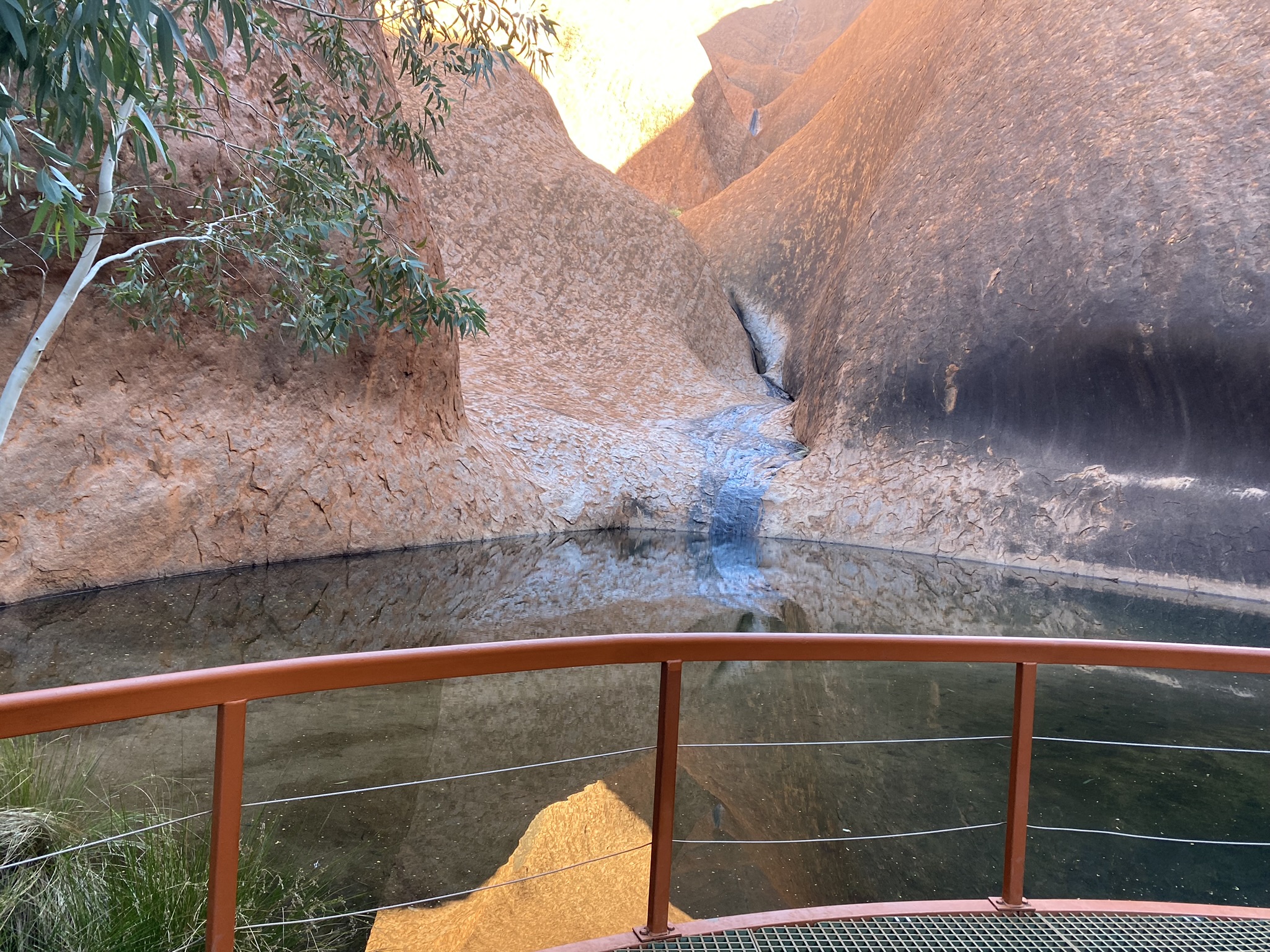
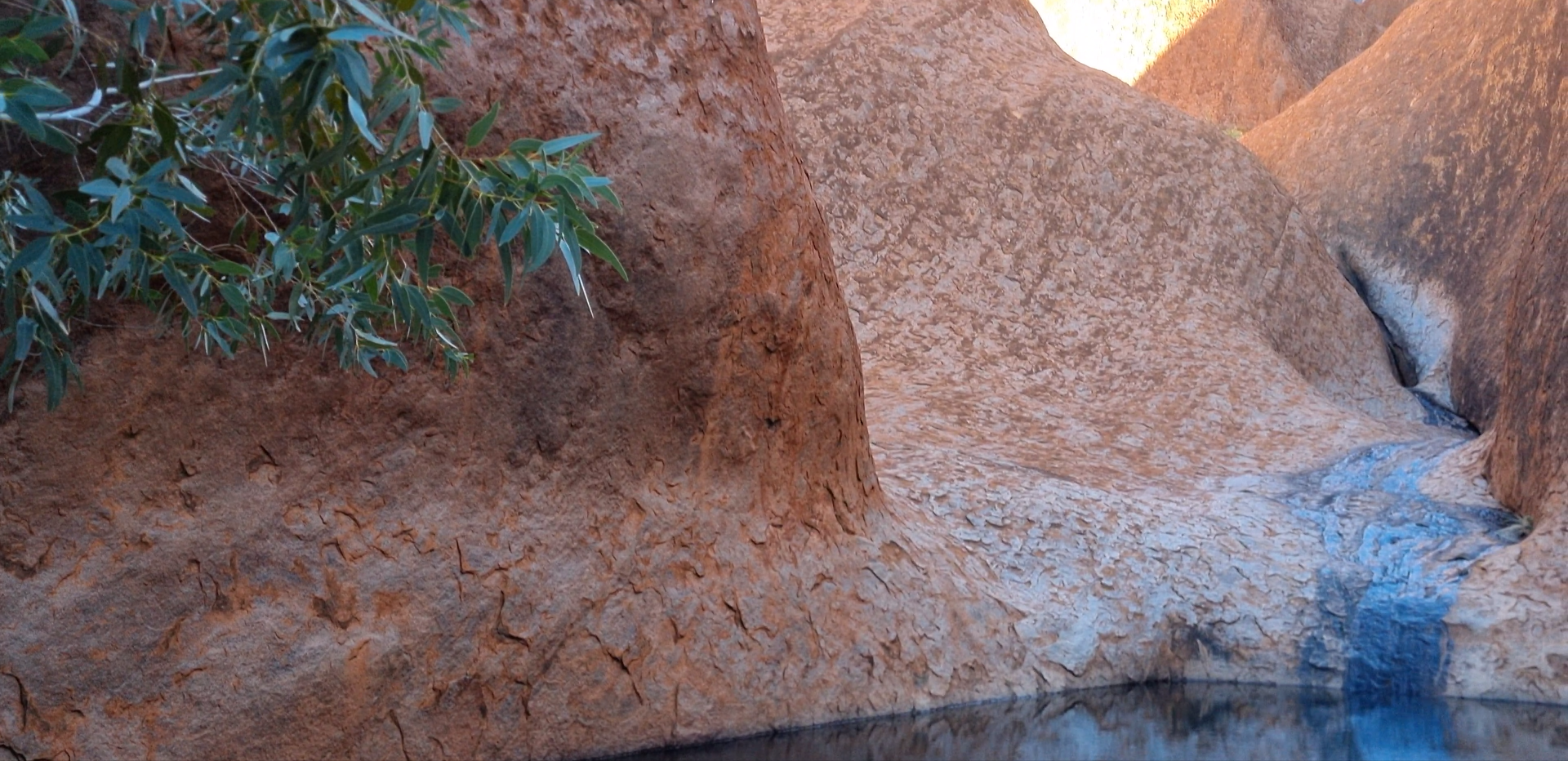

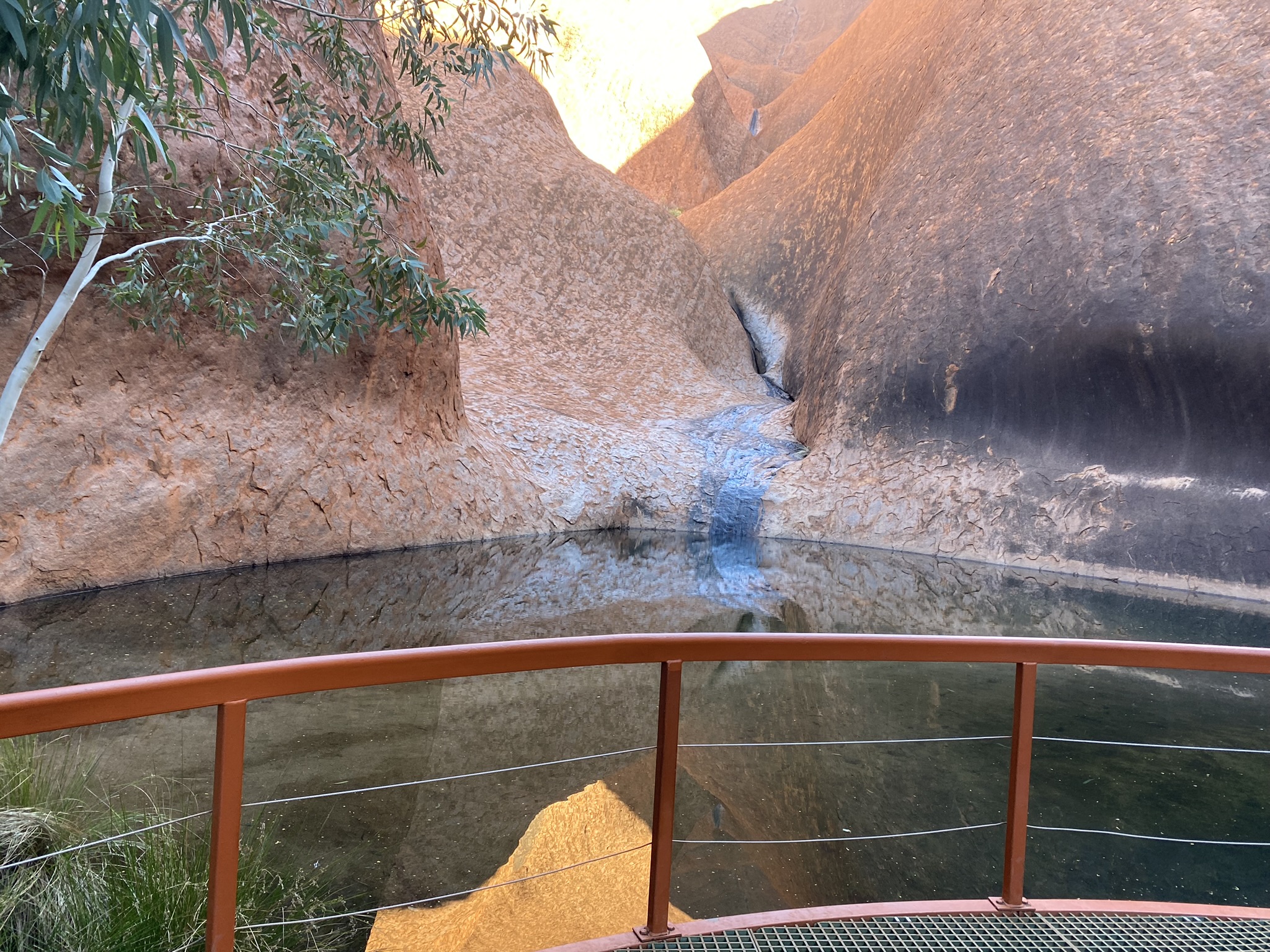
Along the trail, you’ll encounter waterholes, precious oases in this arid land. These waterholes are more than just sources of hydration, they are sacred sites, ingrained with spiritual significance. The Anangu have deep connections to these water bodies, and their stories often revolve around them. Then I reach the Mutitjulu Waterhole, a place of quiet beauty where Kuniya’s grief and vengeance saturated the land. The water is still and clear mirroring the ancient rock face and towering cliffs above. The spirits of both still linger. It is said that a water snake, a descendant of Liru, still inhabits these depths. Sit by its edge, listen to the breeze, and feel the Dreamtime unfold.

Emerging from the Mutitjulu Waterhole, we found ourselves back at the trailhead, heading back to the car park, Uluru bathed in the golden light of the late morning sun. The Kuniya Walk had been short, but it had left an indelible mark. It wasn’t just a stroll through the desert, it was a journey through time, connecting to ancient stories of the land and the enduring spirit of its people.
Respect is paramount when walking the Kuniya Trail. This is sacred ground, and it’s essential to adhere to the cultural guidelines. Avoid touching the rock art or climbing Uluru. Photography is permitted, but it’s important to be mindful of the cultural sensitivities associated with capturing images of sacred sites.
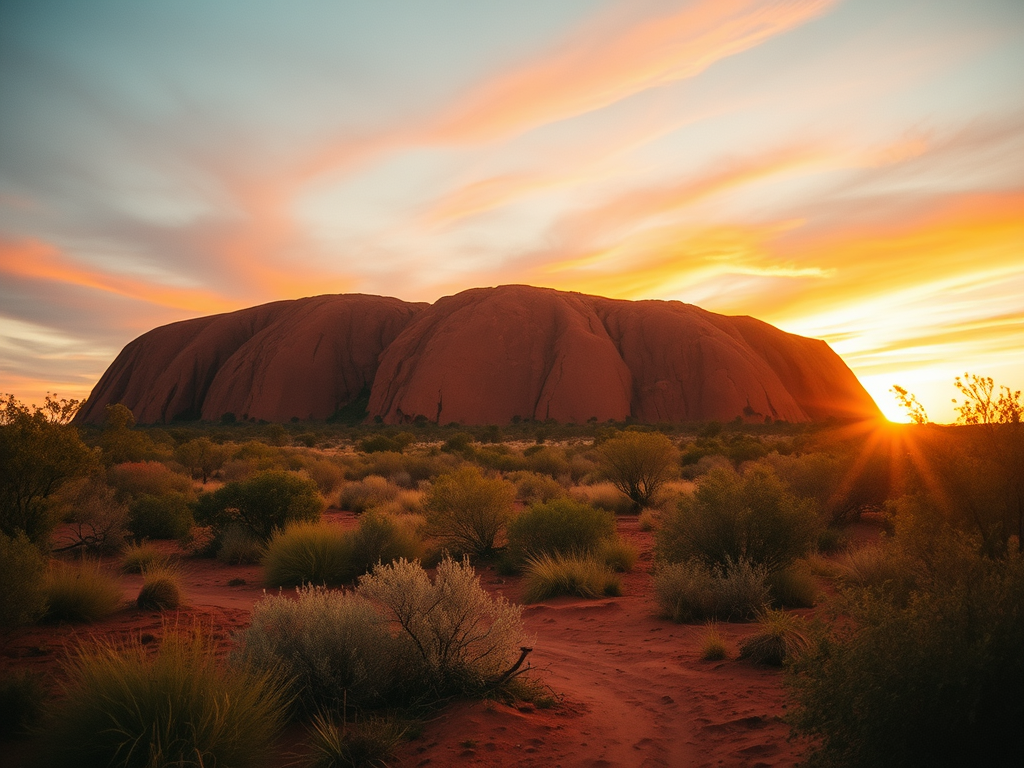
Walking the Kuniya Trail is not just about the physical journey, it’s a spiritual one. As you walk, you’ll feel a profound sense of connection to the land, to the Anangu people, and to something much larger than yourself. It’s an opportunity to connect with an ancient past, to understand the deep spiritual connection between the Anangu and their land, and to gain a profound appreciation for the beauty and complexity of the Australian outback. It’s a journey that will stay with you long after you’ve left Uluru.
So, my fellow wanderers, let’s step lightly, respect the land, and immerse ourselves in more magic of the Uluru – Kata Tjuta National Park. Adventure awaits, where every footprint becomes part of the tale. Join me next time, as we explore Uluru (the sunrises and sunset are mind blowing), Kata Tjuta (The Olgas), Mala Walk, Walpa Gorge, and the Uluru-Kata Tjuta Cultural Centre – Stay Tuned for More of our Desert Escapades!!!

 roadtripn.blog